 JobKing
Getting through a job interview is a major accomplishment, but many job seekers make the mistake of believing their work is finished once they walk out the door or leave the virtual meeting.
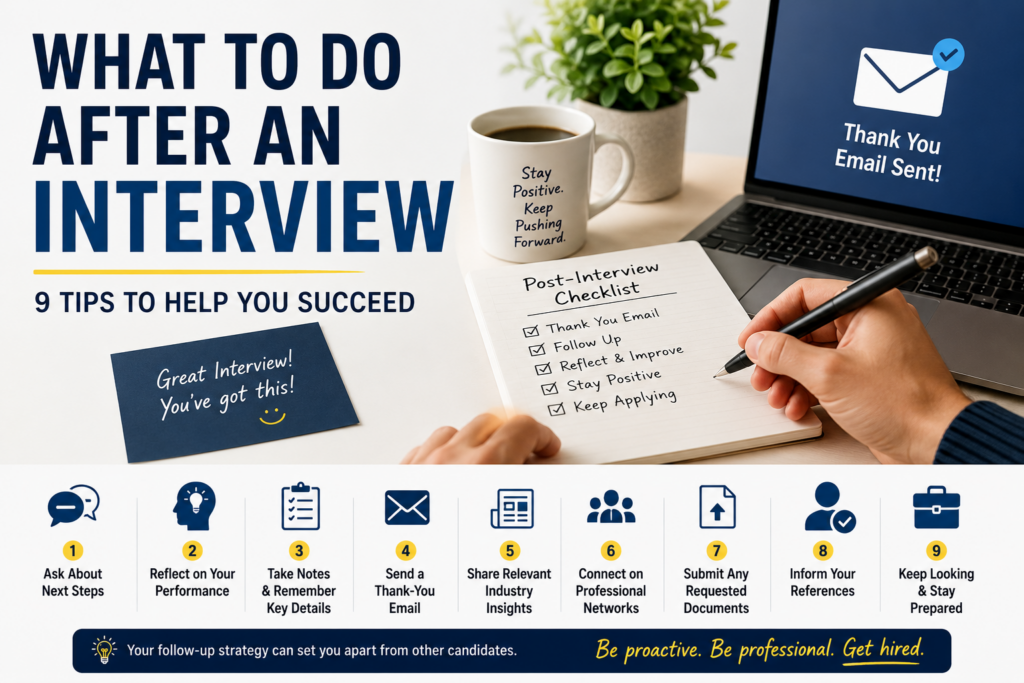
In reality, what you do after an interview can be just as important as what you did during it.
Many hiring managers evaluate candidates not only on their qualifications and interview performance but also on their professionalism, communication skills, follow-up efforts, and overall enthusiasm for the role. In competitive job markets, where multiple candidates may have similar qualifications, your post-interview actions can help you stand out from the crowd.
Whether you’re applying for an entry-level position, a graduate programme, a learnership, an internship, or a senior management role, understanding how to handle the period after an interview can significantly improve your chances of receiving a job offer.
This guide explains exactly what to do after an interview, common mistakes to avoid, how to follow up professionally, and practical strategies that can help you move closer to landing your dream job.
Many candidates spend days preparing for interviews but give little thought to what happens afterward.
The post-interview period matters because it allows you to:
✅ Reinforce a positive impression
✅ Demonstrate professionalism
✅ Show enthusiasm for the role
✅ Clarify information discussed during the interview
✅ Build stronger relationships with recruiters and hiring managers
✅ Differentiate yourself from competing candidates
Employers often view follow-up communication as a reflection of your workplace professionalism. A thoughtful follow-up can demonstrate initiative, attention to detail, and strong communication skills.
After an interview, employers typically begin comparing candidates and reviewing interview notes.
Depending on the company, they may also:
This process can take anywhere from a few days to several weeks.
Understanding this timeline helps reduce anxiety and prevents unnecessary follow-up communication.
One of the most important things you can do during the interview is ask about the next stages of the hiring process.
Many candidates simply thank the interviewer and leave without gathering important information.
Before the interview ends, ask questions such as:
These questions show professionalism and help set expectations.
Knowing the expected timeline can also prevent you from following up too early.
Once the interview is complete, spend some time reviewing your performance while the conversation is still fresh in your mind.
Write down:
This exercise helps improve your performance in future interviews and identifies areas for growth.
Remember that every interview is a learning opportunity, even if you don’t receive an offer.
Many candidates forget valuable information discussed during the interview.
Take notes about:
These notes can be extremely useful if you’re invited back for a second interview or receive a job offer.
They also help personalize your follow-up communication.
One of the most effective post-interview strategies is sending a thank-you email within 24 hours.
Unfortunately, many candidates skip this step.
A thank-you email should:
A simple thank-you message can leave a lasting impression and demonstrate strong communication skills.
“Thank you for taking the time to meet with me today. I enjoyed learning more about the position and your team. Our discussion about professional development opportunities reinforced my excitement about the role. I appreciate the opportunity and look forward to hearing from you.”
If appropriate, your follow-up email can include something useful related to the discussion.
Examples include:
This demonstrates initiative and positions you as someone who stays informed about industry developments.
However, avoid overwhelming the interviewer with excessive information.
Keep it relevant and professional.
Networking remains one of the most powerful career development tools.
After an interview, consider connecting with the interviewer or recruiter on professional networking platforms.
When sending a connection request:
Even if you don’t receive the job offer, maintaining professional connections can lead to future opportunities.
Many job openings are filled through networking and referrals.
Employers often request additional documentation after interviews.
These may include:
Respond promptly whenever possible.
Delays can create a negative impression and may even slow down the hiring process.
Submitting documents quickly demonstrates reliability and professionalism.
If you’ve provided references, let them know they may receive a call or email.
Many employers contact references during the final stages of hiring.
Tell your references:
This preparation allows them to provide stronger and more relevant recommendations.
Strong references can significantly influence hiring decisions.
One of the biggest mistakes job seekers make is stopping their job search after a promising interview.
Until you receive and accept a written job offer, continue:
Many hiring decisions take longer than expected.
Keeping your job search active protects you from disappointment and increases your chances of securing employment.
Even strong candidates can damage their chances by making avoidable mistakes.
Avoid the following:
Repeated emails and phone calls can appear desperate or unprofessional.
Respect the timeline provided by the employer.
If the interviewer requested communication via email, don’t call repeatedly.
Follow their preferred communication method.
Avoid discussing confidential interview details publicly.
Employers often review online activity.
Stay positive but realistic.
Continue your job search until you have signed an employment contract.
Personalized messages leave a stronger impression than copied templates.
A common question among job seekers is:
“When should I follow up after an interview?”
General guidelines include:
Keep follow-ups brief and professional.
While nothing guarantees a job offer, some positive indicators include:
These signs often suggest strong employer interest.
Waiting for interview feedback can be stressful.
Use this time productively by:
Include new skills, certifications, and achievements.
Consider free online courses in:
Practice answers to common questions such as:
Preparation builds confidence.
Before any interview, learn about:
Employers appreciate candidates who understand their business.
Study the vacancy carefully.
Identify:
Use this information to tailor your answers.
Rehearsing answers helps reduce anxiety and improve communication.
Focus on:
First impressions matter.
Choose attire that is:
Professional appearance helps build confidence.
Aim to arrive:
Punctuality demonstrates reliability.
A successful interview doesn’t end when you leave the meeting room or close the video call.
The actions you take afterward can strengthen your candidacy and increase your chances of receiving a job offer.
By asking about next steps, reflecting on your performance, sending a thoughtful thank-you email, preparing your references, networking professionally, and continuing your job search, you position yourself as a serious and motivated candidate.
Remember that job searching is often a journey rather than a single event. Every interview provides valuable experience, insights, and opportunities for growth.
Stay patient, remain professional, continue learning, and keep applying. The right opportunity could be just around the corner.
 📢 Get Job Alerts on WhatsApp
 Home
Home View all posts
 Post a Job