 JobKing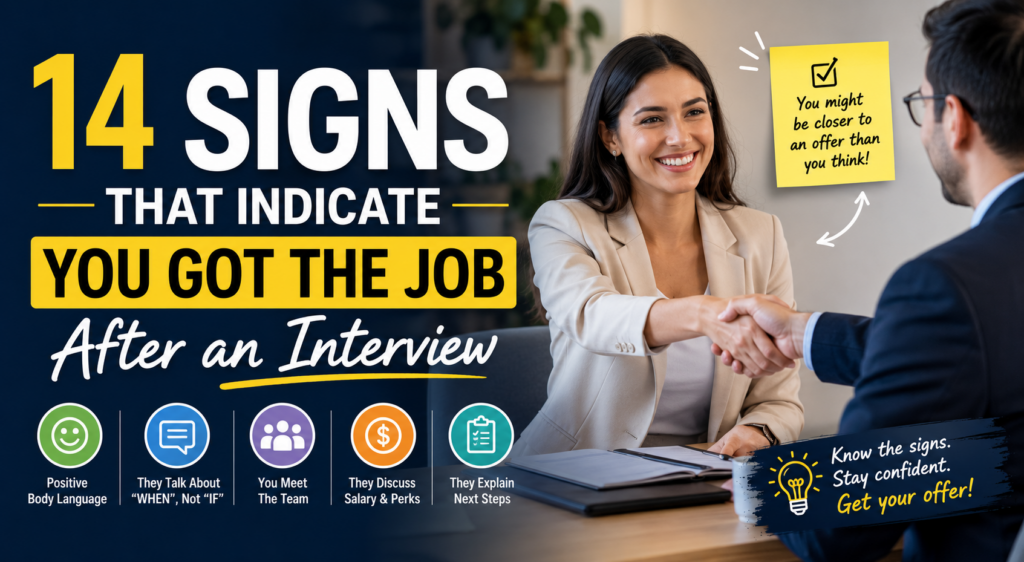
One of the most stressful parts of the job search process is waiting to hear back after an interview. You spend hours preparing your CV, researching the company, practicing interview questions, and attending the interview, only to find yourself wondering whether you made a good impression.
While there is never a guaranteed way to know if you have secured a position until you receive an official job offer, there are often clear signs that indicate an employer is seriously considering you for the role. Understanding these signs can help reduce uncertainty and give you a better idea of where you stand in the hiring process.
Employers often reveal their level of interest through their words, actions, body language, and follow-up communication. By paying attention to these details, you can identify whether your interview was successful and whether you may soon receive a job offer.
In this comprehensive guide, we’ll explore 14 common signs that suggest you may have impressed the hiring team and could be their preferred candidate.
Many candidates leave interviews feeling unsure about their performance. Sometimes an interviewer may seem serious throughout the conversation, while other times they may appear enthusiastic and friendly.
Learning how to recognize positive interview signals can help you:
✅ Understand where you stand in the hiring process
✅ Reduce unnecessary anxiety after interviews
✅ Prepare for possible next steps
✅ Follow up professionally
✅ Improve your future interview performance
Remember, these signs are indicators—not guarantees. Employers often have multiple candidates to consider, and hiring decisions can change based on business needs.
Body language often reveals what words don’t.
If the interviewer appears engaged and interested throughout the conversation, this is usually a positive sign.
Some encouraging body language signals include:
When interviewers display these behaviors, it often means they are genuinely interested in what you have to say and are evaluating you positively.
On the other hand, constantly checking their phone, appearing distracted, or rushing through questions may indicate lower engagement.
One of the strongest verbal clues occurs when an interviewer begins speaking as though you already work for the company.
Pay attention to phrases such as:
These statements suggest the interviewer is already imagining you in the role.
While this doesn’t guarantee a job offer, it often indicates that you’re being seriously considered.
Most interviews begin with structured questions designed to evaluate your qualifications and experience.
However, when the discussion becomes more relaxed and conversational, it can be a strong sign that the interviewer is comfortable with your skills and wants to learn more about you as a person.
They may ask about:
This shift often means they already believe you can perform the job and are now assessing whether you’ll fit into the company culture.
Companies rarely introduce candidates to multiple employees unless they’re genuinely interested.
If you’re invited to meet:
it often means the hiring team wants additional opinions before making a final decision.
Employers generally don’t invest extra time introducing candidates unless they believe there’s a realistic chance of hiring them.
Interviewers may openly express their approval during the discussion.
You may hear comments such as:
Positive feedback during an interview often indicates that your qualifications match the company’s requirements.
This is especially encouraging when the interviewer compares your experience directly to the role’s expectations.
In addition to discussing your qualifications, interviewers may provide verbal encouragement throughout the meeting.
Examples include:
These responses indicate that the interviewer is connecting with your answers and values the information you’re sharing.
Consistent positive feedback throughout the interview is usually a good sign.
Interviews are typically designed to assess candidates.
However, when an interviewer begins highlighting the company’s advantages, they may be trying to convince you to accept a future offer.
Topics they might discuss include:
This often signals that they see you as a strong candidate and want you to be excited about joining the organization.
Salary discussions usually occur when an employer believes there is a realistic possibility of hiring you.
Questions may include:
Employers generally avoid discussing compensation with candidates they have already ruled out.
While salary conversations don’t guarantee success, they often indicate that you’re progressing through the selection process.
A positive sign is when the interviewer provides detailed information about what happens after the interview.
For example, they may explain:
The more specific they are about the process, the more likely it is that they see you as a serious contender.
Many interviewers hand candidates a business card as a courtesy.
However, if they personally encourage you to contact them, this can indicate stronger interest.
Examples include:
Providing direct communication channels often suggests they are open to further engagement and want to maintain communication.
When interviewers ask for your opinion of the role, they may be assessing your level of interest.
Questions could include:
This often indicates they’re trying to determine whether you would accept an offer if one were extended.
Employers who are considering making an offer often want to know when you could start.
Questions may include:
These questions help hiring managers plan staffing and onboarding schedules.
If they’re discussing your start date, it often means they can picture you joining the company.
A workplace tour is frequently one of the strongest indicators of employer interest.
Showing you around the office, warehouse, store, or facility allows them to:
Companies typically don’t spend additional time on tours for candidates they have no intention of hiring.
Reference checks are often among the final stages of the recruitment process.
If the employer contacts your:
it usually means they are conducting final verification before making a hiring decision.
Reference checks require time and effort, so employers typically reserve them for candidates who remain under serious consideration.
For this reason, being informed that your references have been contacted is one of the strongest signs that you’re close to receiving an offer.
Not seeing these signs doesn’t necessarily mean you failed the interview.
Many interviewers are trained to remain neutral and professional throughout the hiring process.
Some hiring managers intentionally avoid giving clues to ensure fairness among candidates.
Additionally, factors such as company policies, internal approvals, budgets, and changing business priorities can all affect hiring decisions.
The best approach is to remain positive and continue applying for other opportunities while waiting for feedback.
Even if you believe the interview went extremely well, there are still important steps you should take.
Within 24 hours, send a professional thank-you message.
Mention:
This demonstrates professionalism and keeps your name fresh in the interviewer’s mind.
If the employer provided a timeline and that date has passed, send a polite follow-up email.
Keep it short and professional.
Avoid sending repeated messages or contacting the company excessively.
One of the biggest mistakes candidates make is assuming they have secured the role.
Until you receive a written offer, continue:
This ensures you maintain momentum regardless of the outcome.
Avoid these common errors:
❌ Assuming you already have the job
❌ Stopping your job search
❌ Ignoring follow-up communication
❌ Failing to thank the interviewer
❌ Constantly contacting the employer
❌ Posting negative comments online
❌ Becoming discouraged too quickly
Professionalism after the interview is just as important as professionalism during the interview itself.
Waiting to hear back after a job interview can be challenging, but understanding the signs of a successful interview can help you better interpret the situation.
Positive body language, detailed discussions about the role, introductions to team members, salary conversations, workplace tours, and reference checks are all encouraging indicators that an employer may be interested in hiring you.
However, no single sign guarantees a job offer. Hiring decisions involve multiple factors, and the only true confirmation comes when you receive an official offer.
Stay positive, continue applying for opportunities, follow up professionally, and use every interview as a chance to learn and improve. Whether this opportunity works out or not, every interview brings you one step closer to your next career success.
There are several signs that may indicate your interview was successful, including positive body language from the interviewer, discussions about next steps, introductions to team members, and questions about your availability to start. While these signs are encouraging, the only confirmation comes when you receive an official job offer.
A longer-than-expected interview can be a positive sign because it often shows the interviewer is interested in learning more about you. However, interview length alone does not guarantee that you will receive a job offer.
Yes. If an interviewer asks about your salary expectations or discusses compensation and benefits, it usually means you are being seriously considered for the position. Employers typically don’t discuss salary details with candidates they have already ruled out.
The timeframe varies depending on the company and the hiring process. Some employers respond within a few days, while others may take several weeks. If you haven’t heard back after the timeline provided during the interview, it’s appropriate to send a polite follow-up email.
Absolutely. Sending a thank-you email within 24 hours of your interview shows professionalism, appreciation, and continued interest in the position. It can also help keep your application top of mind with the hiring team.
Yes. Being introduced to team members, supervisors, or company leaders often indicates that the employer can envision you working within the organization and wants additional feedback before making a hiring decision.
Questions about your start date are often positive indicators. Employers usually ask about availability when they are seriously considering moving forward with your application and want to understand your potential transition timeline.
Reference checks are usually conducted during the final stages of the hiring process. While it doesn’t guarantee a job offer, it is often one of the strongest signs that an employer is interested in hiring you.
Continue applying for other jobs, updating your CV, and preparing for future interviews. It’s important not to stop your job search until you have received and accepted a formal written job offer.
Yes. Some interviewers intentionally remain neutral and avoid showing enthusiasm during interviews. Many candidates receive job offers even when they felt unsure about their performance. The best approach is to remain patient, follow up professionally, and wait for official feedback from the employer.
 📢 Get Job Alerts on WhatsApp
 Home
Home View all posts
 Post a Job