 JobKing
Closing Date: 19 July 2026
Location: Secunda and Sasolburg, South Africa
Contract Type: Fixed-Term Learnership Programme
If you have always dreamed of serving your community, protecting lives, and responding to emergency situations, the SASOL Firefighter Learnership Programme 2026 / 2027 could be the perfect opportunity to begin your career.
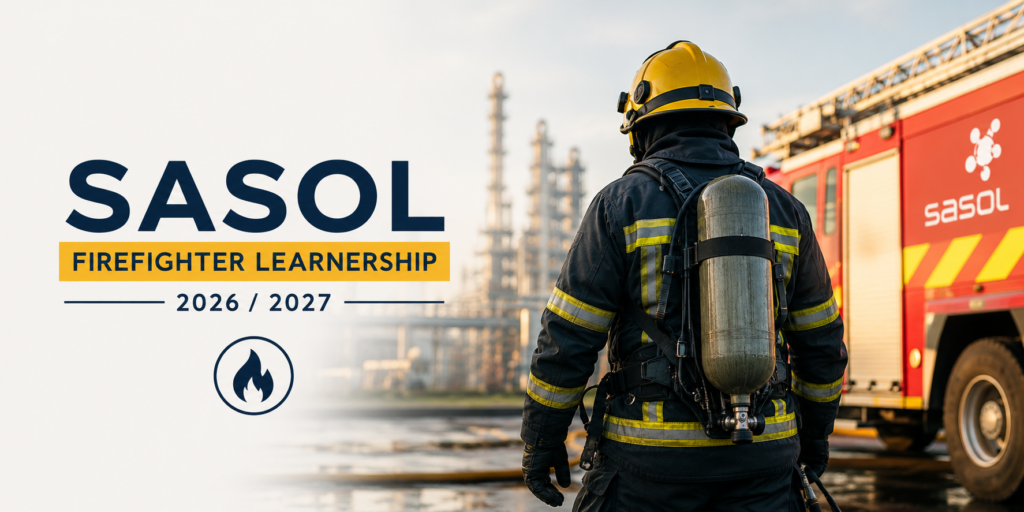
SASOL is widely recognised as one of South Africa’s largest integrated energy and chemical companies, employing thousands of skilled professionals across the country. The organisation is known not only for its innovation and industrial excellence but also for its commitment to developing young South Africans through various training and skills development initiatives.
The Firefighter Learnership Programme offers unemployed youth the opportunity to receive specialised training while gaining valuable workplace experience within a professional emergency response environment. Successful candidates will be exposed to both theoretical and practical learning designed to prepare them for a career in firefighting, emergency response, rescue operations, and industrial safety.
This learnership is ideal for young individuals who are physically fit, mentally resilient, willing to work under pressure, and passionate about making a positive difference in their communities.
A learnership combines structured academic learning with practical workplace training. Unlike traditional classroom-based education, a learnership allows participants to gain real-world experience while developing industry-specific skills.
The SASOL Firefighter Learnership Programme has been designed to equip participants with the knowledge, practical abilities, and workplace readiness required within emergency services and industrial firefighting environments.
Successful learners will receive training in various aspects of emergency response and fire prevention, helping them develop competencies that are highly valued within the safety and emergency management sectors.
The programme is offered at SASOL’s operational facilities in:
Learners will work alongside experienced emergency response professionals and gain first-hand exposure to the challenges and responsibilities associated with firefighting in large industrial environments.
Firefighting is much more than extinguishing fires.
Modern firefighters are highly trained emergency response specialists who perform a wide range of critical duties that help protect lives, property, infrastructure, and the environment.
Firefighters may be involved in:
A career in firefighting offers the opportunity to make a meaningful impact while developing valuable technical and life skills.
Many people are attracted to firefighting because it provides:
For young South Africans looking for a rewarding and challenging career path, this learnership can serve as an excellent foundation.
The SASOL Firefighter Learnership Programme combines classroom-based instruction with practical workplace exposure.
Participants can expect to receive training in areas such as:
Learners will develop an understanding of how fires start, spread, and can be controlled safely and effectively.
Topics may include:
Participants will learn how emergency incidents are managed within industrial environments.
This may include:
Firefighters are often required to rescue individuals from dangerous situations.
Training may include:
Industrial facilities frequently work with hazardous substances.
Learners may receive exposure to:
Safety is a core component of all emergency response activities.
Participants will develop an understanding of:
Successful applicants will be expected to actively participate in all aspects of the programme.
Responsibilities may include:
Learners will be expected to maintain high standards of discipline and commitment throughout the duration of the programme.
To be considered for the SASOL Firefighter Learnership Programme, applicants must meet the following requirements:
Meeting the minimum requirements does not automatically guarantee selection, as competition for these opportunities is typically high.
One of the most important aspects of becoming a firefighter is physical fitness.
Firefighters often work in challenging environments where they may need to:
For this reason, candidates must successfully complete a firefighter fitness assessment.
Applicants should begin preparing physically as early as possible before attending assessments.
Regular exercise, cardiovascular training, strength development, and endurance conditioning can help improve performance during the selection process.
Firefighters frequently encounter situations that require courage, quick decision-making, and emotional resilience.
As part of the recruitment process, candidates must demonstrate the ability to perform under stressful conditions.
The assessment may evaluate comfort levels with:
These evaluations help determine whether candidates can safely operate in environments commonly encountered during emergency response operations.
Participating in the SASOL Firefighter Learnership Programme can provide numerous long-term benefits.
These include:
Many employers place significant value on candidates who have completed structured learnership programmes because they have already gained practical workplace experience.
To improve your chances of success:
Attention to detail can often make a significant difference during the selection process.
Many people think firefighters only respond when there is a fire, but the reality is far more complex. Modern firefighters perform a wide variety of duties every day to ensure they are prepared for any emergency situation.
A typical day may start with equipment inspections. Firefighters must ensure that all emergency vehicles, breathing apparatus, hoses, rescue tools, communication systems, and protective clothing are in excellent working condition. Equipment failures during an emergency can have serious consequences, so routine inspections are a critical part of the job.
Training is another major component of a firefighter’s daily responsibilities. Firefighters regularly participate in drills and simulations designed to sharpen their skills. These exercises may include rescue operations, ladder drills, hazardous material response scenarios, confined space rescue training, and emergency medical response exercises.
In industrial environments such as those operated by SASOL, firefighters may also conduct safety inspections throughout facilities to identify potential fire hazards and ensure compliance with safety regulations.
When an emergency call is received, firefighters must respond immediately. Every second counts during a fire, chemical spill, rescue operation, or medical emergency. Firefighters must remain calm under pressure, assess risks quickly, and work effectively as a team to protect lives and property.
The profession requires discipline, dedication, teamwork, and a commitment to continuous learning. Every day presents new challenges and opportunities to make a difference.
Completing the SASOL Firefighter Learnership Programme can open doors to various career opportunities within the emergency services and industrial safety sectors.
Some potential career paths include:
Industrial firefighters work at large manufacturing plants, refineries, chemical facilities, power stations, and mining operations. They specialise in responding to fires and emergencies within industrial environments.
Many learnership graduates pursue careers with local municipalities and fire departments across South Africa. Municipal firefighters respond to fires, vehicle accidents, rescue operations, and medical emergencies within communities.
Emergency response officers coordinate emergency preparedness plans and assist with incident management during emergencies.
Fire safety officers focus on preventing fires before they occur. Their responsibilities may include conducting inspections, ensuring compliance with safety regulations, and implementing fire prevention strategies.
Rescue technicians specialise in complex rescue operations involving heights, confined spaces, collapsed structures, and hazardous environments.
The knowledge gained through firefighting and emergency response training can also support careers in occupational health and safety management.
As industries continue to prioritise workplace safety, professionals with emergency response training remain highly sought after.
Physical fitness is one of the most important requirements for aspiring firefighters.
Firefighters often operate in physically demanding environments while carrying heavy protective equipment and rescue gear. They may need to climb multiple flights of stairs, carry injured individuals to safety, operate heavy equipment, and work for extended periods under challenging conditions.
Because of these demands, firefighters must maintain excellent physical condition.
Key fitness areas include:
Strong cardiovascular fitness helps firefighters perform strenuous tasks without becoming exhausted too quickly.
Activities such as running, cycling, swimming, and rowing can help improve endurance.
Firefighters frequently lift, carry, push, and pull heavy objects.
Strength training exercises such as squats, deadlifts, lunges, push-ups, and weight training can help build the necessary physical strength.
Emergency situations often require firefighters to move quickly through difficult environments.
Agility training helps improve balance, coordination, and mobility.
Physical fitness and mental resilience go hand in hand. Firefighters must remain focused and composed during high-pressure situations where lives may depend on their decisions.
Developing healthy habits and maintaining a consistent fitness routine can significantly improve a candidate’s chances of success during firefighter assessments.
One of the most common questions asked by prospective applicants concerns earning potential.
Salaries can vary depending on factors such as:
Entry-level firefighters generally earn less while gaining experience. However, experienced firefighters and emergency response professionals can earn competitive salaries, particularly within industrial sectors.
Industrial emergency response positions often offer additional benefits such as:
It is important to remember that the primary goal of a learnership is skills development and workplace experience. The experience gained during the programme can significantly improve long-term earning potential.
If shortlisted, candidates may be invited to attend interviews as part of the selection process.
Preparing properly can significantly improve your chances of success.
Learn about:
Demonstrating knowledge about the company shows initiative and genuine interest.
Review the learnership requirements and responsibilities carefully.
Be prepared to explain:
Examples may include:
First impressions matter.
Wear clean, professional clothing and arrive on time.
Employers value candidates who are motivated, respectful, willing to learn, and eager to contribute.
The SASOL Firefighter Learnership Programme helps participants develop valuable technical and personal skills.
These may include:
Firefighters must communicate clearly and effectively during emergencies.
Emergency response relies heavily on cooperation and trust among team members.
Many emergency situations require individuals to take initiative and make quick decisions.
Every emergency presents unique challenges that require practical solutions.
Firefighters must prioritise tasks and respond efficiently during critical incidents.
Participants develop a strong understanding of workplace safety and risk management.
These transferable skills can benefit individuals throughout their careers, regardless of the industry they eventually pursue.
Emergency service professionals play a vital role in protecting communities and supporting economic development.
Without trained firefighters and emergency responders, communities and industries would face significantly greater risks from fires, accidents, natural disasters, and hazardous incidents.
Emergency response professionals help:
For many individuals, the opportunity to make a meaningful difference in the lives of others is one of the most rewarding aspects of the profession.
No. This learnership is designed to provide training and workplace experience for individuals entering the field.
Yes. Learnerships combine theoretical learning with practical workplace experience.
Yes. Applicants must possess a valid Code B driver’s licence or higher.
Applicants must be between 18 and 29 years old.
This opportunity is specifically intended for candidates residing within SASOL’s local communities in Secunda and Sasolburg.
Yes. Applicants must successfully complete firefighter fitness assessments.
Firefighting involves risks, but extensive training, safety procedures, and protective equipment help minimise those risks.
Completion of the programme does not automatically guarantee permanent employment. However, the skills, experience, and industry exposure gained can significantly improve future employment prospects.
The SASOL Firefighter Learnership Programme 2026 / 2027 represents an exceptional opportunity for young South Africans seeking a meaningful and rewarding career. Through structured training, workplace experience, and professional development, participants gain valuable skills that can serve as a foundation for long-term success within the emergency services and industrial safety sectors.
For individuals who are physically fit, motivated, disciplined, and passionate about helping others, this programme offers far more than training—it offers the opportunity to build a career dedicated to protecting lives, safeguarding communities, and contributing to one of South Africa’s most important industries.
With only a limited number of positions available in Secunda and Sasolburg, interested candidates should ensure their applications are submitted before the closing date of 19 July 2026 and begin preparing for the selection process as early as possible.
A career in firefighting demands courage, commitment, and resilience, but for those willing to embrace the challenge, the rewards can last a lifetime.
 📢 Get Job Alerts on WhatsApp
 Home
Home View all posts
 Post a Job